 ARCADE
How to make an escape room game
A locked room, a ticking clock and clues hidden everywhere. Escape rooms are one of the most satisfying games to design, and you can build one in your browser.
An escape room game is a chain of puzzles: each solution gives the player a clue, a key or a code that unlocks the next step, until the final door opens. It is all about the "aha!" moment, when a detail the player saw five minutes ago suddenly makes sense.
The best part: you do not need complex combat or fast reflexes. A good escape room is mostly clever design, which makes it a great game to build without code. This guide shows you how to plan the puzzles, hide the clues and build your own escape room on Arcade.
What makes a great escape room game
Great escape rooms are built on these four ideas.
📖 A story
Why are you locked in? A mystery makes every clue more exciting.
🔗 Chained puzzles
Each solution unlocks the next puzzle, never at random.
🔍 Fair clues
Everything needed to solve a puzzle is somewhere in the room.
⏳ A ticking clock
A timer turns thinking into excitement.
How to make an escape room game, step by step
Here is how to design an escape room that players finish with a smile.
Write the setup
Where, why, how long.
Plan the puzzle chain backwards
Start from the exit.
Mix puzzle types
Codes, objects, patterns, hidden items.
Hide clues fairly
Hidden, not impossible.
Add a timer and hints
Pressure, with a safety net.
Playtest with fresh eyes
Watch someone solve it.
1. Write the setup
"You are locked in a mad scientist's lab and the experiment explodes in 15 minutes." The setup gives you the decor, the tone and the timer in one line.
Pick a place full of objects that can hide things: a lab, an attic, a library, a ship cabin. The more natural hiding spots, the easier it is to design puzzles.
2. Plan the puzzle chain backwards
Begin with the final lock, for example a 4-digit code. Then decide where each digit comes from, then what unlocks those places. Planning backwards guarantees that everything connects and nothing is a dead end.
Write the chain down as a simple list before you build anything: key in the drawer → opens the cabinet → note with colors → panel → code → exit.
3. Mix puzzle types
Alternate between finding hidden items, reading codes, matching symbols, moving objects and combining items. Variety keeps players engaged; five code locks in a row feel like homework.
Use the table below for ideas, and pick puzzles that fit your setting: star charts in an observatory, recipes in a kitchen, tide tables on a ship.
4. Hide clues fairly
Clues can be behind paintings, in drawers or on the back of a book, but players should be able to find them by looking around. Glowing or highlighted objects show what can be used.
Build the room with Morph, Arcade's building assistant, then place each clue yourself and check it can be seen from where the player stands.
5. Add a timer and hints
A timer adds tension: 10 to 15 minutes is a good length for a first room. Show it on screen, and make the last minute feel urgent with a sound or a color change.
A hint system (a note, a voice, a friendly NPC) helps players who are stuck instead of making them quit. Give a small hint first, then a bigger one if they are still stuck.
6. Playtest with fresh eyes
You know every answer, so you cannot judge difficulty. Watch a friend play without helping and note where they get stuck or try something you did not expect.
If a player tries a logical solution that does not work, consider making it work. Good escape rooms reward smart thinking, not only the creator's idea.
10 escape room puzzle ideas
Here are puzzles that work well in escape room games, with how each one plays:
| Puzzle | How it works |
|---|---|
| Hidden key | A key is hidden in a drawer, under a rug or inside a vase. |
| Number code | Digits found around the room open a padlock or a door panel. |
| Color sequence | Press colored buttons in the order shown on a painting or a note. |
| Symbol matching | Match symbols on a wall to the ones on a box or a book. |
| Combine two items | A battery and a flashlight, a rope and a hook. |
| Light and shadow | A lamp reveals a hidden message or a shadow forms a number. |
| Order the objects | Books, statues or bottles placed in the right order open a door. |
| Clock puzzle | Set a clock to the time mentioned in a letter. |
| Reflection | A mirror shows writing that only makes sense reversed. |
| Weight balance | Put the right objects on a scale to open a hatch. |
Start with a ready-made idea
Not sure how to begin? Here is a starting idea for an escape room. Not your style? Roll another one. Copy it, paste it in Arcade and you will have a first playable version to shape. Then change the details to make it truly yours.
Make an escape room game called "The Last Experiment". The player is locked in a mad scientist's lab and must escape in 15 minutes. Create a chain of 4 puzzles: find a key hidden in a drawer, use it to open a cabinet with a colored note, match the colors on a panel to reveal a code, then type the code on the exit door. Highlight the objects the player can interact with, add a visible timer and a hint button, and show the goal and the controls at the start.
Paste it and build on ArcadeEscape room game ideas to start from
- The Locked Attic: Find the code hidden in old family photos.
- Museum After Hours: Escape before the guard finishes his round.
- Submarine Breach: Fix the leaks and open the hatch before the water rises.
- The Painting Rooms: Walk into paintings to reach new rooms.
- Detention: Escape the classroom before the janitor locks the school.
- Pharaoh's Tomb: Solve the tomb's puzzles while the sand rises.
Want more? The game idea generator writes a full concept and prompt in one click.
Escape and puzzle games made on Arcade
Made by creators like you. Click one to play it free in your browser.
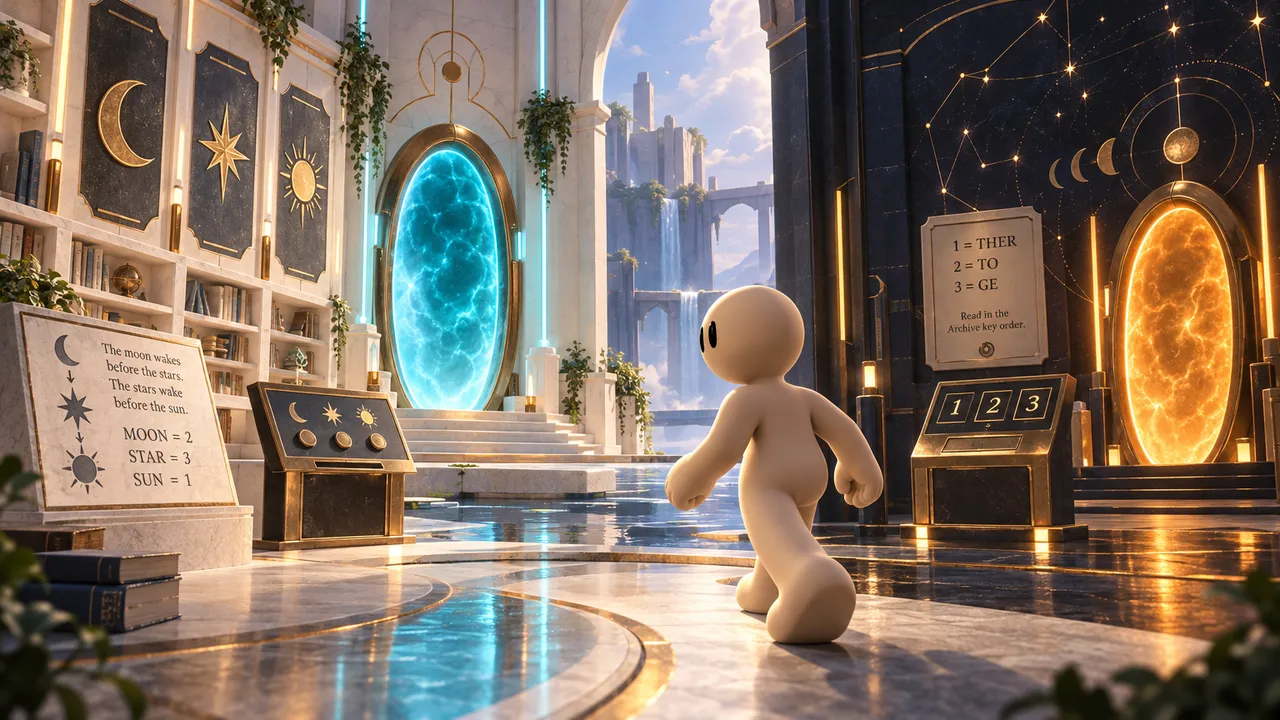
Bloopy's curious partner wandered off in the garden and got sucked into another dimension. Solve the puzzles to bring them back.
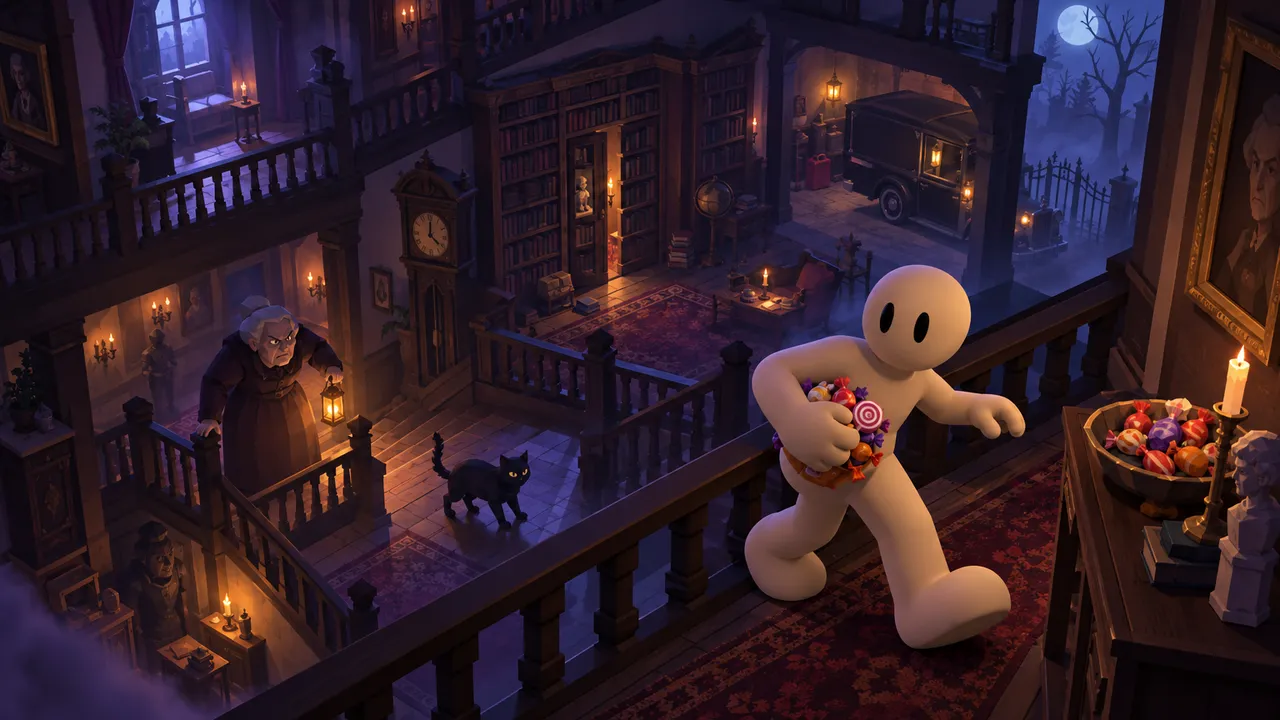
Locked upstairs in Grandma Hollow's creaky house, pick the locks and find a way out with your candy.

Find your way out of a dark submarine in this atmospheric horror escape game.

Elves have turned the library upside down. Sort every book onto the right shelf, then enjoy a cup of tea.
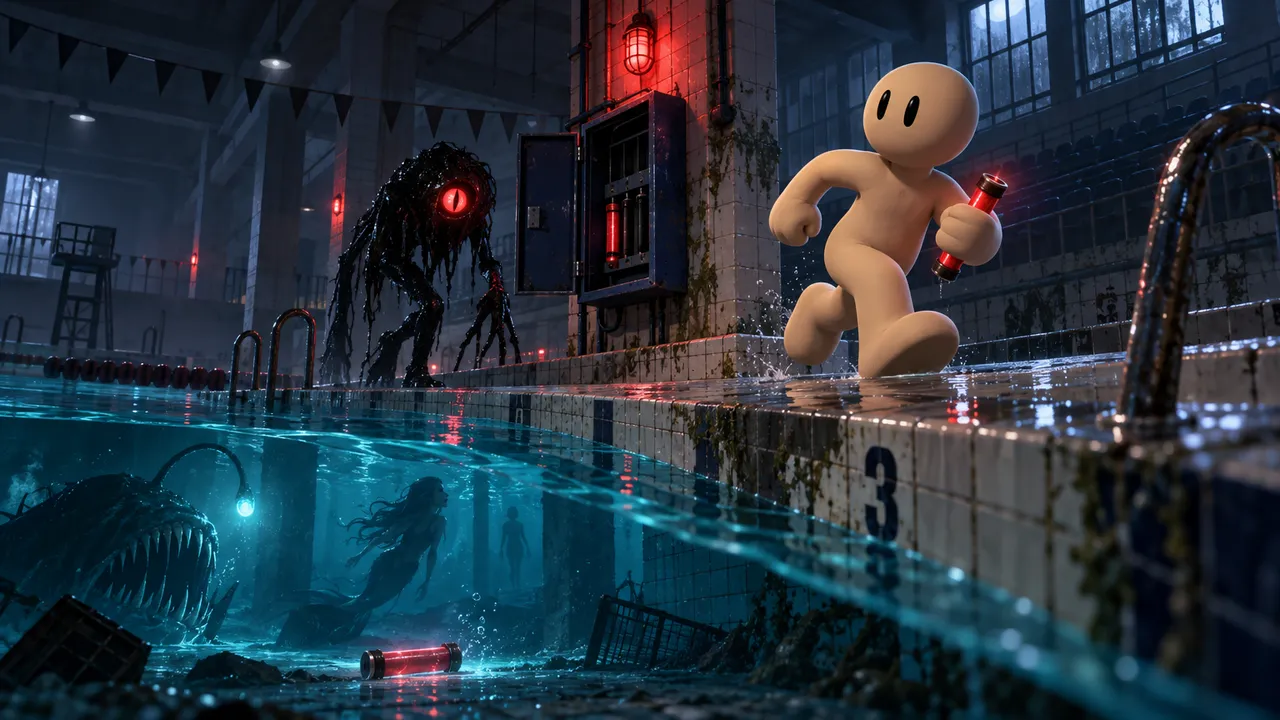
Search an abandoned indoor pool for three emergency fuses and escape before the lights go out.
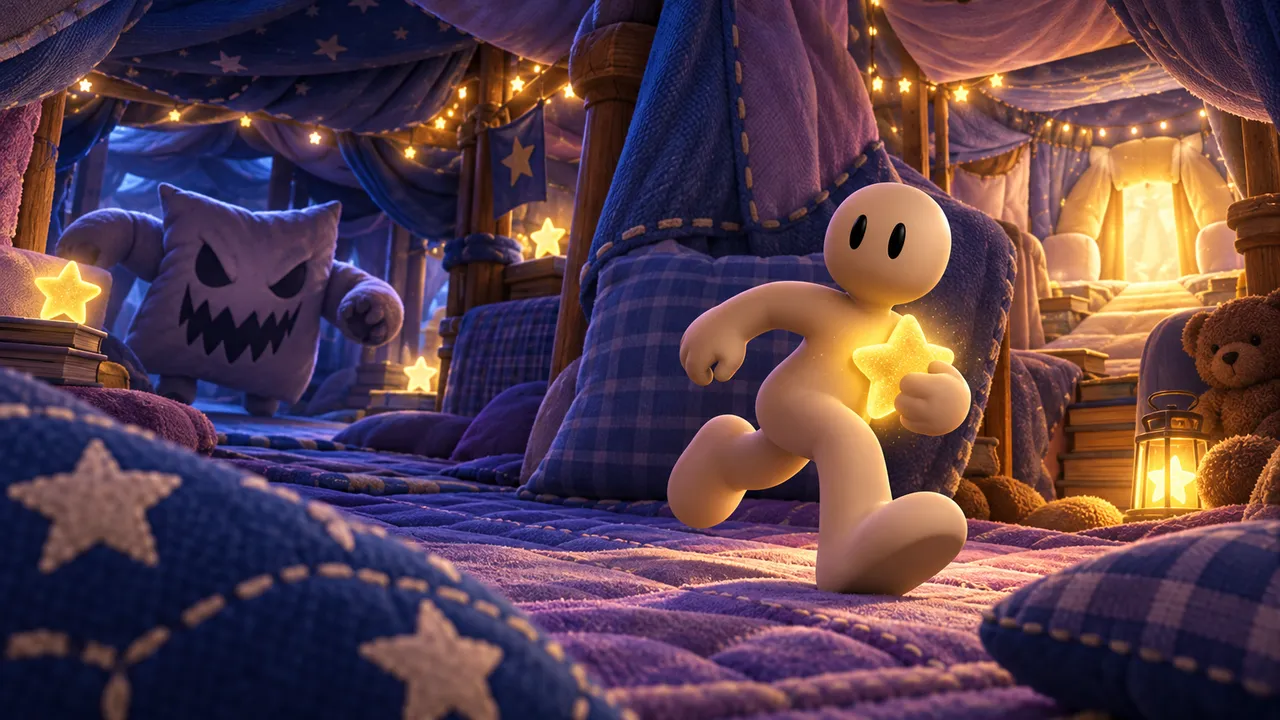
Explore a blanket fort, gather three glowing stars, and escape before the pillow monster catches you.
Common mistakes to avoid
Why players get frustrated in escape rooms.
Impossible leaps of logic
If only the creator could guess it, it is not a puzzle.
Clues that are too hidden
A clue nobody finds is a dead end.
No hint system
Stuck players quit instead of asking for help.
All puzzles the same
Five code locks in a row get boring.
Lock your players in
Describe it on Arcade and build it right in your browser. No coding, no downloads, free.
Make your escape roomFAQ
How do I make an escape room game without coding?
On Arcade you describe your room and puzzles to Morph, Arcade's building assistant, then place objects and set the rules for each puzzle visually. No code needed.
Is Arcade free?
Yes. Arcade is free: build, publish and share your games in your browser, on a computer or a phone.
How many puzzles should an escape room have?
For a first game, 4 to 6 puzzles in a 10 to 15 minute experience is a great size. One room is enough; add a second room once the first one works.
What are good escape room puzzle ideas?
Hidden keys, number codes, color or symbol matching, combining two items, a lamp that reveals a message, a clock to set, objects to put in order or a scale to balance.
How do I make sure my escape room is not too hard?
Plan the puzzle chain backwards, make sure every clue is visible, add a hint button and watch a friend play. If they are stuck for more than two minutes, add a hint or make the clue easier to spot.
Can I make an escape room for friends to play together?
Yes. Arcade supports multiplayer games, so friends can search the room together. Split clues between two rooms so players have to talk to each other.
Can I make a scary escape room?
Yes. Many escape games on Arcade mix puzzles with horror: dark corridors, a creature that hunts you, fuses to find. Our horror game maker guide shows how to build the tension.