 ARCADE
How to make a puzzle game
One clever rule, a few levels that twist it, and that click when players get it. Here is how to make a puzzle game people love to solve.
Puzzle games are all about the moment the answer clicks. They can be cozy (sorting books on a shelf), clever (bending the rules of physics) or tense (a lock to open before time runs out), and they are some of the highest rated games on Arcade.
A good puzzle game is built on one simple rule that you twist again and again. This guide shows you how to find that rule, design levels around it and build the whole thing with Morph, our little AI companion.
What makes a great puzzle game
Great puzzle games are very different from each other, but they all share these four things.
💡 One clear rule
Push blocks, match colors, sort items. Easy to get, hard to master.
📚 Levels that teach
Each level introduces or twists one idea.
🧩 Fair solutions
Everything players need is on screen. No guessing.
✨ A satisfying click
A sound, an animation, a reward when it is solved.
How to make a puzzle game, step by step
Here is the path from a clever idea to a puzzle game people finish.
Find your rule
One mechanic, explained in a sentence.
Make a first level
Teach the rule without text.
Twist the rule
One new idea per level.
Add a theme
Cozy, spooky or silly.
Add hints and feedback
Help without spoiling.
Playtest and share
Watch where people get stuck.
1. Find your rule
Start with a rule you can explain in one sentence: "push the crates onto the marks", "sort every book by color", "lights you touch switch on and off with their neighbors".
If you need three sentences to explain it, simplify. The fun comes from twisting a simple rule, not from a complicated one.
2. Make a first level
Design level 1 so the solution is almost obvious. Players should learn the rule just by playing it once.
Describe the rule and the first level to Morph, our little AI companion, then play it and adjust until it feels instant.
3. Twist the rule
Each new level should change one thing: a new obstacle, a new item, less space, fewer moves. Players learn, then get surprised.
Plan 8 to 12 levels for a first game, from easy to tricky.
4. Add a theme
A theme makes a puzzle game memorable: a messy library, a lab where physics goes wrong, a garden with a portal, a kitchen to tidy.
The theme can also explain the rule: elves messed up the library, so the books need sorting.
5. Add hints and feedback
Give players feedback on every move: a sound when something fits, a shake when it does not. Add a hint button or a hint after a few failed tries.
Show progress on screen: level 4 of 10, books sorted 12 of 20.
6. Playtest and share
Ask a friend to play without explaining anything. Where they stop for a long time, add a hint or simplify. Where they solve it in 2 seconds, add a twist.
When it flows, publish your game on Arcade and share the link.
Types of puzzles you can make
Not sure which kind of puzzle to build? Here are the most popular types, and what each one needs:
| Puzzle type | The rule | Works great for |
|---|---|---|
| Sorting | Put every item in the right place | Cozy, relaxing games |
| Pushing | Move blocks onto targets | Classic brain teasers |
| Matching | Connect or match colors and shapes | Quick sessions on a phone |
| Escape | Find clues and codes to open a door | Mystery and spooky themes |
| Physics | Use gravity, light or water to reach a goal | Clever, surprising levels |
Pick one type for your first game. You can always mix them in a sequel.
Start with a ready-made idea
Not sure how to begin? Here is a starting idea for a puzzle game. Not your style? Roll another one. Copy it, paste it in Arcade and you will have a first playable version to shape. Then change the details to make it truly yours.
Make a puzzle game called "Messy Library". Elves have mixed up the library. The player sorts books onto the right shelves by color and size. 10 levels, each one adding a new twist: bigger shelves, books that must stay together, a shelf that moves. A cozy sound plays when a shelf is complete. Show the level, the books sorted and the controls on screen.
Paste it and build on ArcadePuzzle game ideas to start from
- Messy Library: Sort books onto the right shelves after the elves came by.
- Crate Garden: Push flower crates onto their spots, no pulling allowed.
- Light Switch Lab: Turn every light on when each switch flips its neighbors.
- Gravity Homework: Each level, gravity works a different way.
- Color Pipes: Connect each fountain to its flower.
- Museum Escape: Find the code hidden in the paintings before closing time.
Want more? The game idea generator writes a full concept in one click, and our list of 100 video game ideas has plenty more.
Puzzle games made on Arcade
Made by creators like you. Click one to play it free in your browser.

Elves have turned the library upside down. Sort every book onto the right shelf, then enjoy a cup of tea.
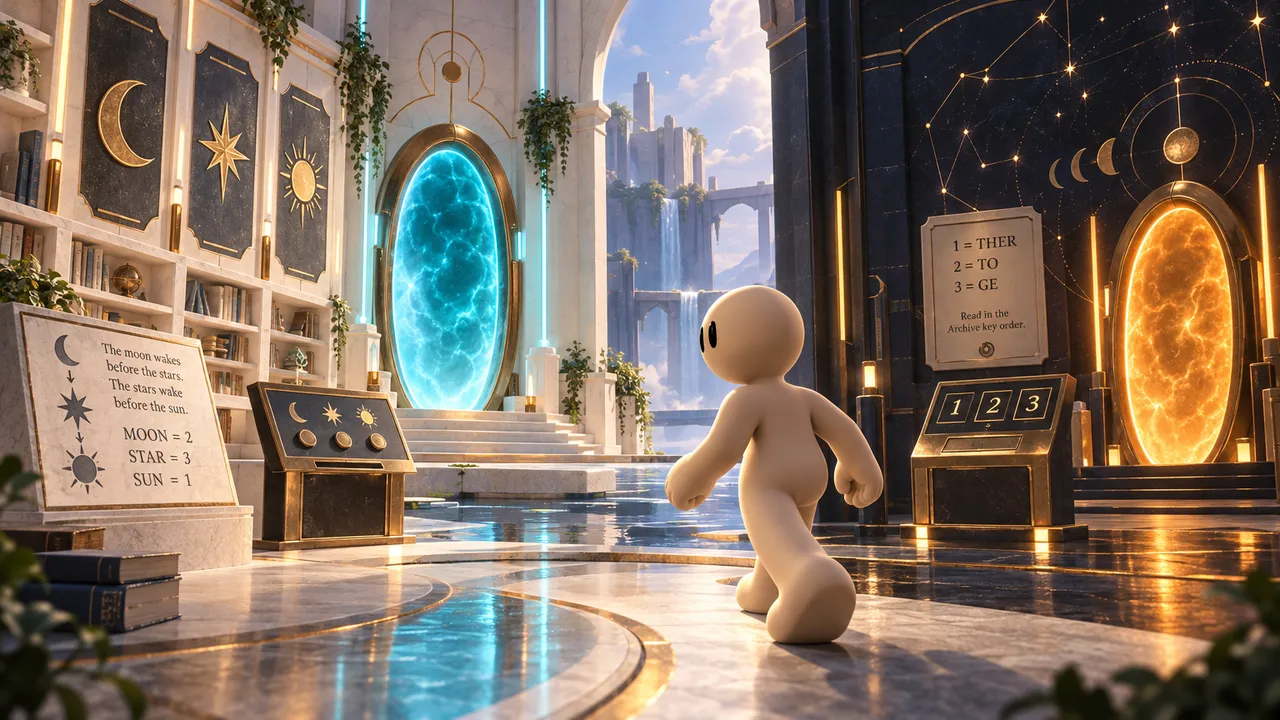
Bloopy's curious partner wandered off in the garden and got sucked into another dimension. Solve the puzzles to bring them back.

A school where wrong answers become the laws of nature: fix your homework to put four strange worlds right.
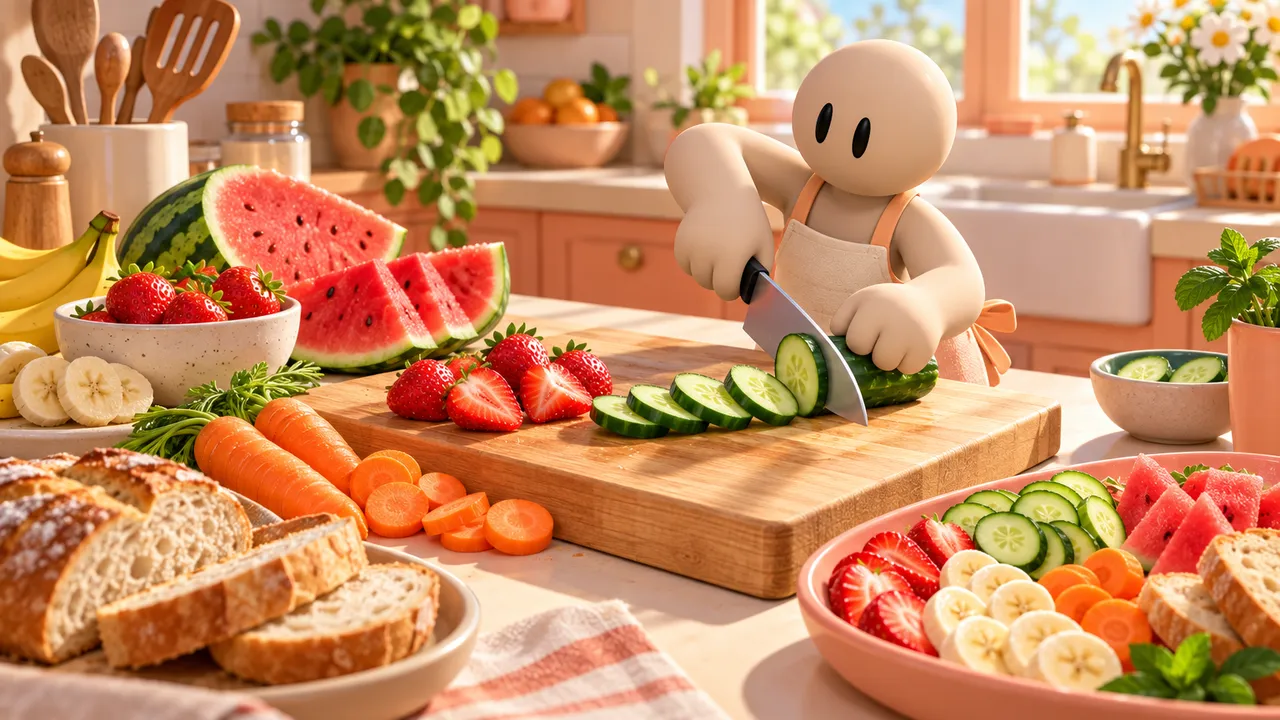
Tap colorful foods into neat slices on a cozy cutting board and fill your platter. Calm and satisfying.
Common mistakes to avoid
These are the reasons players give up on a puzzle game.
A rule nobody gets
If players cannot figure out what to do in level 1, they leave.
Huge difficulty jumps
Level 3 should not need a skill that levels 1 and 2 never taught.
Hidden information
If the answer depends on something off screen, it feels unfair.
No feedback
Silent moves make players unsure if they are doing it right.
Build a puzzle people want to solve
Tell Morph, our little AI companion, what you want to make and watch it come to life, right in your browser. No coding, no downloads, free.
Make your puzzle gameNew to making games? See how our AI game maker works, or follow the step-by-step guide to make your own game.
FAQ
Can I make a puzzle game without coding?
Yes. On Arcade you describe your rule and your levels to Morph, our little AI companion, and it builds a playable game you can keep changing by chatting. No code needed.
Is Arcade free?
Yes. Arcade is free: build, publish and share your games in your browser, on a computer or a phone.
How many levels should my puzzle game have?
8 to 12 levels is a great size for a first puzzle game. Start very easy and end with one level that makes players think.
How do I make puzzles that are hard but fair?
Put everything players need on screen, introduce one new idea at a time and test with someone who has never seen your game.
Should I add a timer?
Only if it fits the theme. Cozy puzzles work better without one; escape puzzles get more exciting with a countdown.
Can people play my puzzle game on their phone?
Yes. Arcade games run in the phone's browser with touch controls. Puzzles are great on phones because most moves are a single tap.
Can I make an escape room instead?
Yes. Escape rooms are puzzle games with clues, codes and locked doors. See our guide on how to make an escape room game.